
Home Maintenance
Waterproofing for Bangalore Homes: Terrace, Basement and Bathroom Options
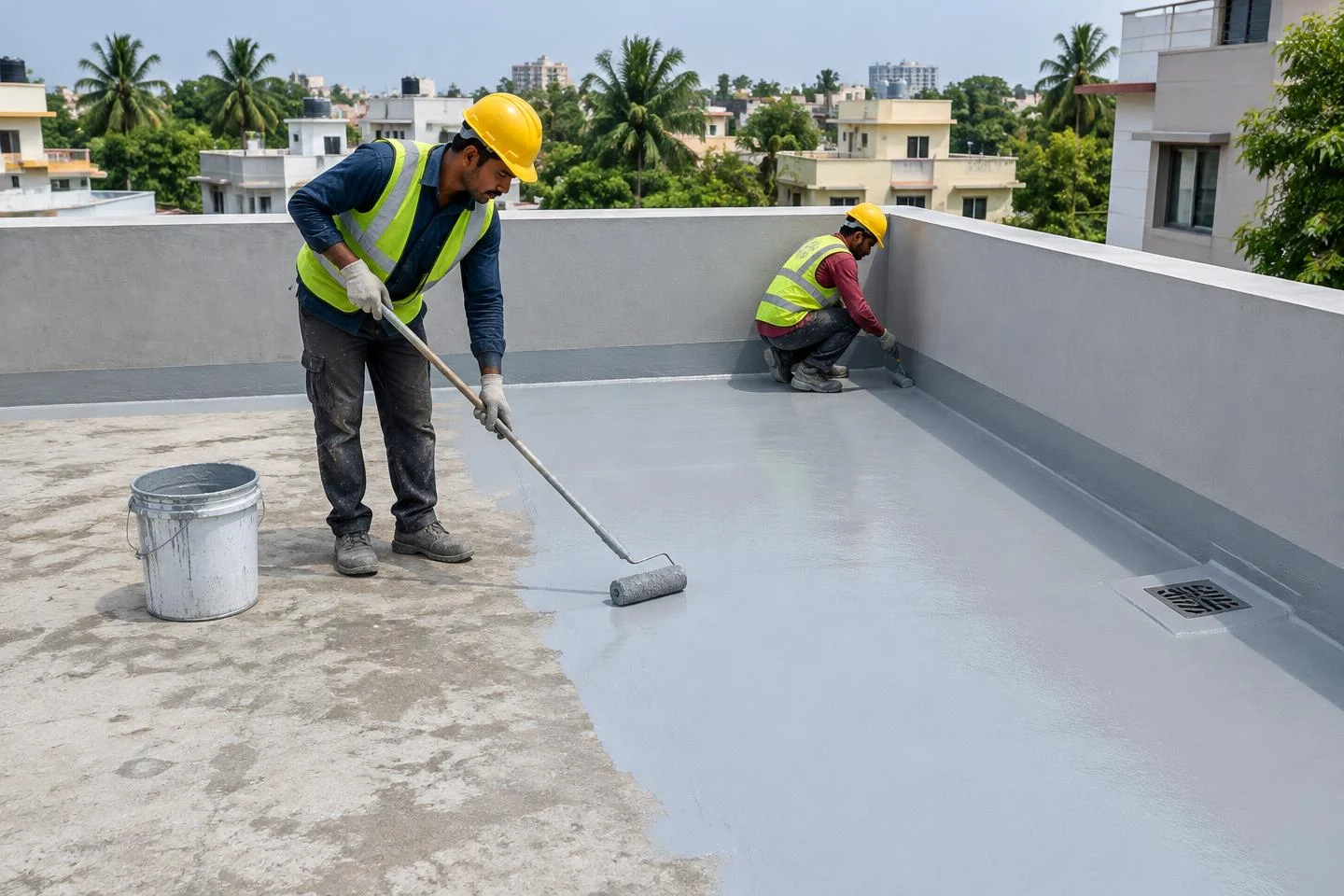
A damp ceiling, peeling bathroom paint or water entering a basement can look like the same problem, but each may need a different solution. For Bangalore homes, rain exposure, terrace drainage, plumbing leaks and groundwater conditions should be assessed before choosing a waterproofing product.
Good waterproofing is a complete system: sound surfaces, suitable membranes, detailed joints, reliable drainage and careful testing—not simply another coat of paint. This guide explains practical terrace, basement and bathroom options and what to discuss with your contractor.
Start by finding the source of water
Before treating a visible stain, check when it appears and what is above or outside it. Rain-related leakage may come from the terrace, parapet, facade or a blocked outlet. A stain that persists in dry weather could be linked to plumbing, a tank, a bathroom or groundwater. Condensation and rising damp need different diagnosis from a leaking roof.
An inspection may include checking drains and slopes, testing plumbing, mapping cracks and examining joints. Water can travel along slabs and walls, so the damp patch is not necessarily directly below its entry point. Covering it with interior paint alone does not repair the source.
Waterproofing options at a glance
| Area | Options worth assessing | Details that determine success |
|---|---|---|
| Terrace | Exposed-rated liquid membranes; sheet membranes; protected systems below screed or tiles | Slope, outlets, parapet upstands, movement joints, UV exposure and foot traffic |
| Basement | External positive-side membranes; integral waterproofing as part of new construction; compatible internal remedial systems where access is limited | Groundwater pressure, slab–wall joints, penetrations, protection and drainage |
| Bathroom | Flexible cementitious or suitable liquid membranes; compatible sheet systems under tiles | Floor–wall junctions, shower walls, pipe collars, drain connection, thresholds and testing |
There is no single best material for every home. Product compatibility, substrate condition, access, movement and the required finish matter as much as the material category.
Terrace waterproofing for Bangalore homes
A terrace is exposed to sun, rain and temperature changes. Even a good membrane can be undermined by ponding, damaged joints or poorly connected drains.
Option 1: Exposed liquid-applied membranes
Appropriate liquid systems form a continuous layer around corners and complex details. Depending on the product, these may be acrylic, polyurethane or another specified chemistry. Choose a system explicitly rated for the intended exposure: not every liquid membrane tolerates UV, persistent ponding or regular foot traffic.
The specification should identify surface preparation, primer, crack treatment, reinforcement at details, application thickness and any protective topcoat. A cool-roof coating and a waterproofing membrane are not automatically the same thing.
Option 2: Sheet membranes
Suitable bituminous or synthetic sheet systems offer controlled manufactured thickness. Their performance still depends on seams, laps, terminations and detailing around outlets and penetrations. Sheets may be fully bonded or installed using another approved method.
Some systems need protection from sunlight or traffic; others are designed for exposure. Heat-applied installations involve fire risks and should be handled by trained installers with the required safety controls—not attempted as a DIY repair.
Option 3: Protected waterproofing below screed or terrace tiles
Where a tiled or regularly used terrace is desired, the membrane may sit within a protected build-up. The membrane, screed, insulation if any, adhesives and tiles must be compatible and arranged according to the system design.
Tiles and grout are not a substitute for the waterproofing layer. Protection helps limit damage, but future leak repairs may require opening the finish. Additional layers also add weight and can change thresholds and drainage levels; assess these before overlaying an old terrace.
Terrace details to insist on
- A designed fall toward clear, correctly positioned outlets rather than relying on coating to solve ponding.
- Proper transitions up parapets and around door thresholds.
- Approved treatment of movement joints, cracks, pipe bases and drain connections.
- Repair or removal of weak, detached and incompatible existing layers.
- Application only under the moisture and weather conditions allowed by the product.
- A planned inspection and suitable water test after the specified curing period, where safe and appropriate.
Active, widening or structural cracks need an engineer’s assessment before being treated as routine waterproofing defects. Keep access and fall protection in place during roof work.
Basement waterproofing: manage pressure, not just dampness
Basement leakage can be driven by groundwater or water trapped against buried walls. A paint-like coating alone may not withstand pressure or solve a failed construction joint.
Option 1: Positive-side external waterproofing
Positive-side waterproofing is installed on the side facing the water—usually outside buried walls and beneath a new basement slab. It can prevent water entering the structure when designed as a continuous system.
Depending on the project, the system may use sheet or liquid membranes with protected transitions. Protection boards or other specified layers help prevent damage during backfilling. Drainage provisions may reduce water accumulation but do not replace the membrane.
For an existing house, external access can be difficult. Excavation near foundations must be planned by qualified professionals; never undermine footings or neighbouring structures to reach a wall.
Option 2: Integral waterproofing and joint detailing in new construction
An approved concrete mix and compatible admixtures can form part of a basement strategy. They do not eliminate the need for crack control, proper compaction, curing, waterstops and sealed penetrations.
Slab–wall junctions, construction joints and service entries deserve explicit details. The design must consider groundwater pressure and structural loading, including uplift where applicable.
Option 3: Internal or negative-side remedial treatment
Where external access is unavailable, suitable negative-side cementitious or crystalline systems may be considered after diagnosis. Their limitations must be explained: treating the inner face does not necessarily stop water entering the wall, and movement or active joint leakage may need additional engineered repair.
Localised injection treatment may be appropriate for particular cracks or joints, but it is not a blanket cure for every basement. Product selection and installation require specialist assessment.
Drainage and pumps
Where a drainage or sump-pump system is part of the design, agree how collected water will be discharged, how the pump will be maintained and what happens during a power failure. Do not assume a pump alone is waterproofing, or discharge water in a way that creates a neighbour or foundation problem.
Avoid entering a flooded basement with possible electrical hazards. Seek qualified assistance before inspection or pumping.
Bathroom waterproofing: beneath the tiles is where it matters
Bathrooms combine frequent wetting with many joints and penetrations. Leaks often begin at a drain, pipe entry, floor–wall junction or shower corner rather than across the middle of a tile.
Option 1: Flexible cementitious membranes
Compatible two-component or other specified flexible cementitious systems are commonly used beneath tiled wet areas. Their suitability depends on substrate movement, the intended water exposure and the complete product system.
The substrate must be sound and prepared, with corners, pipe penetrations and drains treated using the specified reinforcement or sealing accessories. A rigid cement slurry is not equivalent to a flexible membrane system.
Option 2: Suitable liquid-applied or sheet wet-area systems
Approved liquid or sheet systems can be used beneath tiles where they are designed for internal wet areas and compatible with the adhesive and finish. Continuity at junctions and a watertight connection to the drain are essential.
For liquid membranes, coating count alone is not proof of adequate thickness. For sheets, seam and corner detailing matter. Follow the manufacturer’s full system requirements rather than mixing unrelated products without approval.
What a complete bathroom scope should cover
- Test plumbing separately so a pipe leak is not mistaken for membrane failure.
- Prepare the floor and walls, repairing unsound areas before waterproofing.
- Detail floor–wall junctions, shower walls, thresholds, niches and pipe entries to the project specification.
- Ensure the waterproofing connects correctly to a compatible drain assembly.
- Arrange floor falls so water reaches the drain without persistent pooling.
- Carry out the specified water test after curing and before concealing the membrane with finishes.
- Protect the waterproofing during tiling and later fitting installation.
Replacing grout or applying silicone may address a local maintenance issue, but it does not restore a failed concealed membrane. Adding a new coating over tiles is only appropriate when an assessed system supports that substrate and use; do not assume it will repair hidden damage.
Testing: agree the procedure before installation
A flood or ponding test can help check watertightness where the system and structure allow it. Do not fill a terrace or bathroom with water without checking the safe loading, test depth, duration and drainage procedure. Water adds weight, and uncontrolled testing can damage finishes or adjacent rooms.
Follow the specified curing time and test method, inspect the areas below and around the test zone, and document the outcome. There is no universal test duration for every membrane. A successful test is a useful installation check, not a guarantee against future damage or every possible leak.
What should a waterproofing quotation include?
Ask for a written scope rather than comparing only a price per square foot:
- The diagnosed source of water and the areas included.
- Whether old tiles, screeds or coatings will be removed.
- Surface repairs, slope corrections, joints and drain modifications.
- The proposed membrane system, protection layers and compatible finishes.
- Application and quality-control requirements, testing and reinstatement.
- Access, safety arrangements, debris removal and any exclusions.
- Written warranty coverage, claim procedure, maintenance responsibilities and exclusions.
Costs, installation time and warranty terms are site- and contract-specific. This guide does not promise a fixed rate, service life or blanket leak-free guarantee.
Maintenance before and after rainy periods
Keep terrace outlets clear, inspect accessible joints and avoid puncturing membranes with new fixtures. Have new solar-panel supports, tanks and pipe installations detailed so they do not damage the waterproofing.
In bathrooms, maintain sealant joints and address plumbing leaks promptly. For basements, inspect any accessible drainage and pump arrangements according to their maintenance plan. Investigate recurring dampness rather than repeatedly repainting it.
Frequently asked questions
Which waterproofing is best for a Bangalore terrace?
The right system depends on the existing build-up, exposure, drainage, movement and terrace use. An exposed membrane needs different properties from one protected beneath screed or tiles; diagnosis comes before product selection.
Can waterproofing be done during rain?
Application conditions are product-specific. Rain, a wet substrate or inadequate curing can affect adhesion and performance. Schedule work for the permitted conditions and use appropriate temporary protection when needed.
Can I fix basement seepage from inside?
Sometimes a suitable internal system or localised repair is feasible, but the cause, groundwater pressure and structural condition must be assessed. Explain the limits of an internal treatment before proceeding.
Do new bathroom tiles stop leaks?
Not by themselves. The waterproofing beneath them, pipework, drain connection and junction detailing must all be sound.
Get a site-specific waterproofing assessment
For terrace, basement or bathroom leakage in Bangalore, start with an inspection and a clear written scope. Explore Kumud Innovator’s waterproofing service or contact the team to discuss the affected area and symptoms. Photos, the timing of leaks and details of previous repairs can help the initial discussion; the final recommendation requires site assessment.
Technical references
- Crommelin waterproofing membrane guide: exposure, membrane selection and below-ground protection.
- Mapei technical guidance on waterproofing operations: below-ground systems, joints and penetrations.
- Internal wet-area membrane code of practice: wet-area system design and installation.
These manufacturer and industry references explain general technical principles; they are not Indian statutory approvals or endorsements of a particular brand. Follow applicable local requirements, project design and the selected system’s current technical instructions. This article is homeowner guidance, not a DIY installation specification or structural advice.