
Construction Basics
Benefits of Using Cement That Does Not Require Water Curing
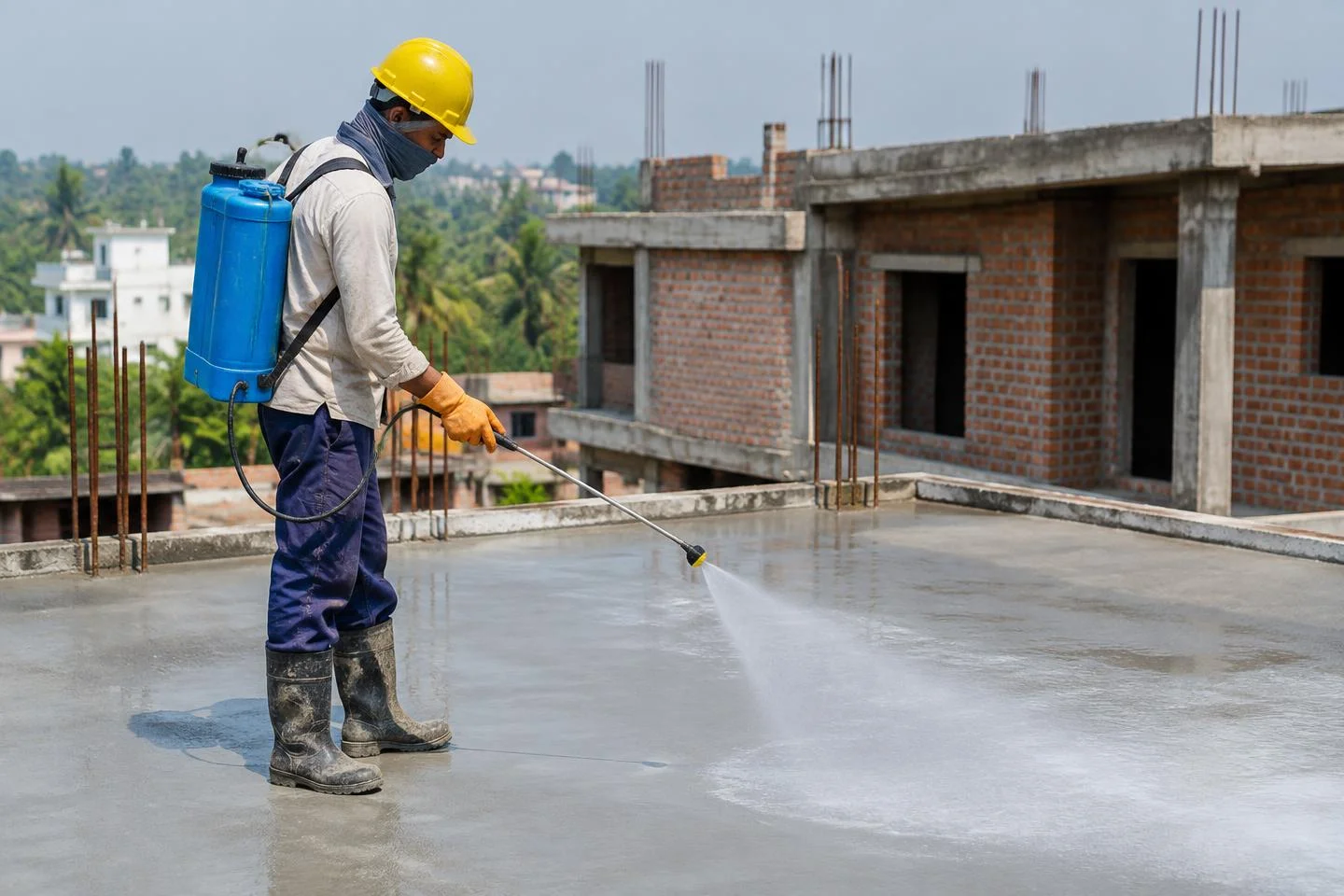
When planning a house in Bangalore, homeowners sometimes hear about “cement that does not require water curing.” The attraction is understandable: less water use, less daily sprinkling and fewer missed curing rounds. But the phrase needs an important qualification.
Ordinary cement-based concrete still needs water for hydration and suitable curing. Some engineered mixes and approved curing methods can reduce or replace repeated external water application—not eliminate the need for curing itself. Before accepting a no-water-curing claim, ask exactly which product, mix and curing system is proposed.
What does “no water curing” actually mean?
Water added during mixing reacts with cement in a process called hydration. Curing maintains suitable moisture and temperature so concrete can develop its intended strength and durability. Leaving a freshly cast slab exposed to drying is not a curing method.
The phrase “no water curing” may refer to a membrane-forming curing compound, an internally cured concrete mix or a specialised factory-made material with its own instructions. These are not interchangeable. A claim for one mortar, plaster or concrete product should not be applied to every building stage.
| System | How it works | What homeowners should know |
|---|---|---|
| Conventional water curing | Supplies moisture through an approved method such as ponding or wet coverings | Needs planned water supply, supervision and protection from drying |
| Curing compound | Forms a membrane that reduces moisture loss from the concrete surface | May replace repeated watering where the engineer and specification permit; coverage, timing and finish compatibility matter |
| Internal curing | Uses an internal water reservoir, such as prewetted lightweight aggregate or suitable polymers, within a designed mix | Can support hydration and reduce certain shrinkage risks; does not automatically remove external curing requirements |
| Self-compacting concrete | Flows and consolidates with little or no vibration | A placement method, not a promise of self-curing or freedom from curing |
Benefits of reducing repeated water curing
1. Lower demand for water applied on site
A suitable moisture-retention system can reduce the water needed for repeated sprinkling or ponding. This can be useful where a project depends on tanker deliveries or has limited water access. Mixing water is still required, and any total saving depends on the project and chosen system; there is no universal saving percentage.
2. Less repeated manual watering
An approved curing compound can reduce the routine work of returning to water the same surface. However, it replaces that work with another quality-control task: correct application, complete coverage and inspection. It does not mean the site can be left unsupervised.
3. More consistent moisture protection when correctly applied
Missed watering rounds can allow concrete surfaces to dry. A properly specified, continuous curing membrane can help retain moisture between site visits. Gaps, damage or incorrect application can compromise that protection, so workmanship remains essential.
4. Potential help with hydration and shrinkage control
Internal curing supplies additional water from within a designed concrete mix. Technical guidance identifies potential improvements in hydration and reductions in shrinkage and cracking for suitable applications. These benefits are mix-specific—not a guarantee of crack-free concrete or a substitute for structural design, joints and good construction practice.
5. Better planning on sites with difficult access
Where repeated watering is difficult, an approved alternative may simplify the curing arrangement. Columns, vertical faces, exposed slabs and areas after formwork removal still need a clear method suited to their conditions. One approach may not suit every element of a house.
Important limitations before choosing the material
- Do not stop curing ordinary OPC, PPC or PSC concrete based on a sales claim. Get the engineer's written specification for the actual mix and application.
- “Self-compacting” does not mean “self-curing.” Easy placement says nothing by itself about the curing requirement.
- Curing compounds are not waterproofing systems. Reducing early moisture loss does not make a roof leakproof or replace its waterproofing design.
- Check subsequent finishes. Some membranes can affect the bond of plaster, tile adhesives, coatings or waterproofing. Confirm compatibility and any removal or preparation requirements with the manufacturers and engineer.
- Weather matters. Heat, wind and low humidity can accelerate evaporation. Early protection and application timing must be planned rather than assumed.
- No automatic cost or time guarantee. Compare product cost, labour, water, preparation and inspections for the specific site. Reduced watering does not justify early loading, formwork removal or skipping strength checks.
Is this suitable for house construction in Bangalore?
It may be useful where repeated water application is difficult, but suitability depends on the concrete mix, building element, exposure, planned finishes and project specification. The same product should not be assumed suitable for an RCC slab, masonry mortar and plaster.
Ask the structural engineer or concrete supplier to document the proposed curing method before casting begins. For structural concrete, the plan should work alongside the specified grade, correct batching, placement, compaction, testing and protection of the concrete. An approved alternative must meet the applicable project requirements; a product advertisement is not a replacement for them.
A homeowner's checklist
- What is the exact product and is it intended for concrete, mortar or plaster?
- Is it a curing compound, an internally cured mix or something else?
- Does the product data sheet actually permit omitting repeated external watering in this application?
- Has the engineer approved the method for each relevant building element?
- Who checks application timing, coverage, protection and any damaged areas?
- Will the system work with the proposed tiles, paint, plaster and waterproofing?
- What testing and site records will demonstrate that the specified concrete quality is achieved?
- What is the fallback curing arrangement if the product cannot be applied correctly or weather conditions change?
Frequently asked questions
Does this concrete need no water at all?
No. Cement hydration requires water. An approved system may retain moisture or provide an internal reservoir so repeated external watering is reduced or changed.
Can I simply skip water curing after buying premium cement?
No. The price or brand of cement alone does not establish that curing can be omitted. Follow the actual product instructions and the engineer-approved curing specification.
Will it prevent all cracks?
No. Correct curing can reduce risks associated with early drying and support strength development, but cracking also depends on design, restraint, joints, workmanship and environmental conditions.
Is there one fixed curing duration for these systems?
No single duration should be assumed. The mix, cementitious materials, weather, element and applicable specification determine the curing plan. Internal curing is not blanket permission to shorten external curing.
Does it make construction cheaper?
It may reduce some watering work or water demand, but total cost depends on the material, application, quality checks and finish preparation. Compare a project-specific proposal rather than a general saving claim.
The takeaway
The benefit is not “concrete that needs no care.” It is the possibility of a better-planned, water-efficient curing system for the right application. Choose a documented method that protects concrete quality first, and treat any water or labour savings as project-specific benefits.
Read our guide to concrete grades at different building stages for more context. Planning a new home or renovation in Bangalore? Discuss your project with Kumud Innovator and bring the material data sheet so the proposed scope and curing approach can be reviewed.
Technical references
- American Concrete Institute: What is curing? — moisture, temperature and hydration fundamentals.
- American Concrete Institute: Common curing methods — supplying water and preventing moisture loss, including curing compounds.
- ACI PRC-213.1-24: Internally Cured Concrete Using Prewetted Absorptive Lightweight Aggregate — internal-curing mechanisms, benefits and limitations.
- American Concrete Institute: Consolidation and self-consolidating concrete — why self-compacting concrete concerns placement, not curing.
These references explain construction principles; they are not a substitute for applicable Indian project specifications or site-specific engineering advice.